Cold Pressed Mustard Oil: A Complete Guide to Quality, Uses & Storage
Learn about cold pressed mustard oil, hydraulic cold pressing, its culinary uses, storage tips, and what to look for when buying quality mustard oil.
SIGO Team
SIGO Oils

Cold Pressed Mustard Oil: A Complete Guide to Quality, Uses, and Storage
Mustard oil has been a familiar ingredient in Indian kitchens for generations. From preparing everyday sabzi to making pickles and traditional dishes, its distinctive aroma and strong flavour have made it a popular choice for cooking.
Today, many consumers are paying closer attention to how their cooking oil is produced. Terms such as cold pressed, natural oil, and hydraulic pressed oil are becoming more common on oil labels and online product pages.
But what do these terms actually mean? How is cold pressed mustard oil made? What should you check before buying a bottle? And how can you store mustard oil properly at home?
In this guide, we will explore the basics of cold pressed mustard oil, explain the hydraulic pressing process, and share practical information to help you make an informed choice.
What Is Cold Pressed Mustard Oil?
Cold pressed mustard oil is extracted from mustard seeds using mechanical pressing, without relying on high-temperature cooking or chemical solvent extraction during the pressing process.
Mustard seeds contain oil that can be separated from the solid seed material through pressure. The resulting oil has the characteristic flavour and aroma associated with mustard.
The term cold pressed generally describes the method used to extract oil. It does not automatically mean that every cold pressed oil has the same nutritional profile, purity, or quality.
The final quality of mustard oil depends on several factors, including:
The quality and freshness of the mustard seeds.
The cleanliness of the raw materials.
The extraction and filtration process.
Storage conditions.
Testing and compliance with applicable food-safety standards.
For consumers, understanding the production process is a useful first step towards choosing a cooking oil that suits their household needs.
How Is Hydraulic Cold Pressed Mustard Oil Made?
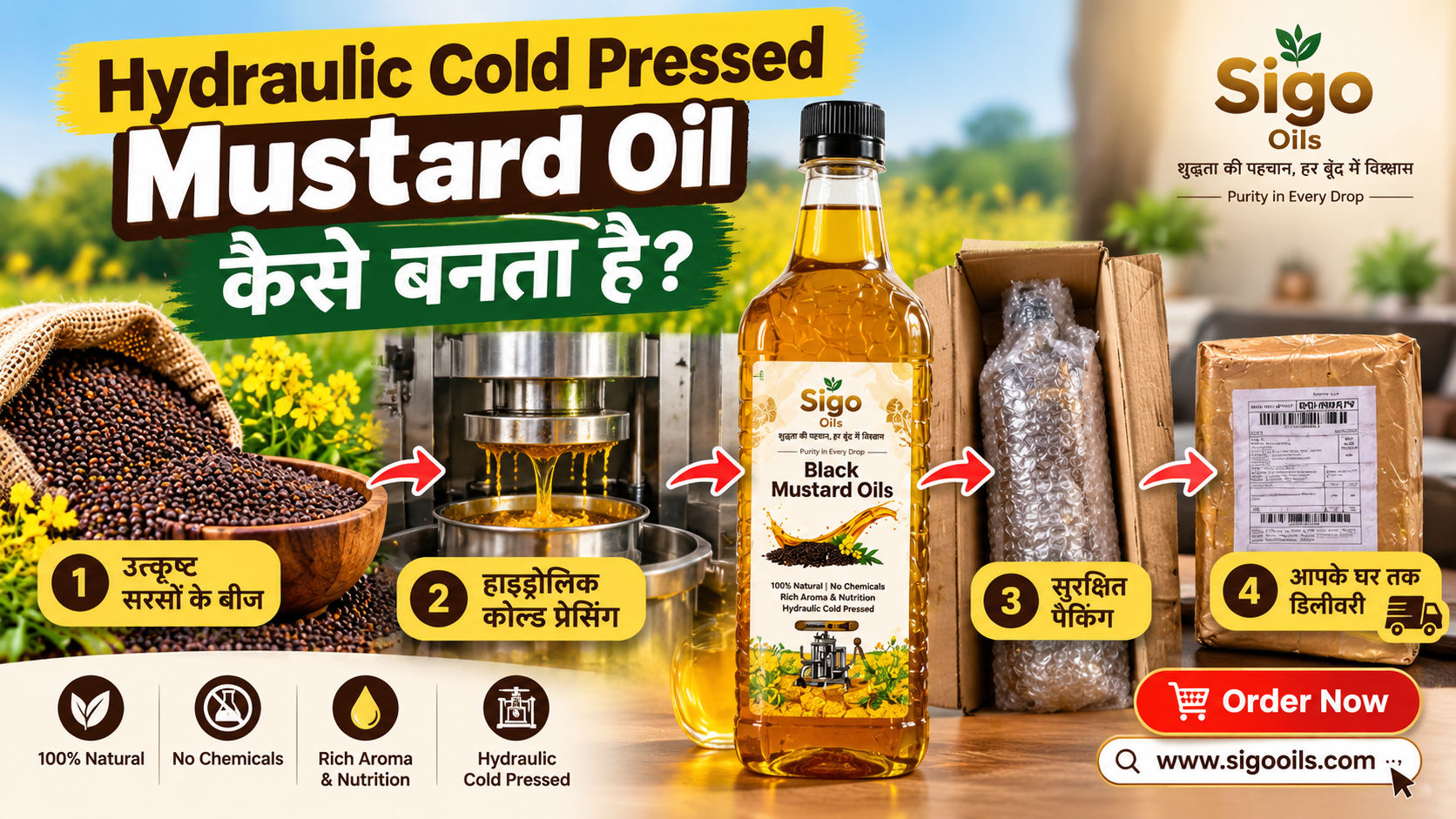
Hydraulic cold pressing is a mechanical method of extracting oil from oilseeds. A hydraulic press uses pressure to separate oil from prepared seeds.
At Sigo Oils, hydraulic cold pressing is the process we use to produce our cold pressed oils. The exact operating conditions, preparation steps, and filtration practices should be verified against the actual production process used for each batch.
Here is a general overview of how hydraulic cold pressed mustard oil is produced.
1. Selection of Mustard Seeds
The process begins with selecting suitable mustard seeds. Good-quality raw materials are important because the condition of the seeds can affect the flavour, aroma, and quality of the finished oil.
Seeds should be checked for cleanliness and signs of spoilage before processing.
2. Cleaning the Seeds
Mustard seeds may contain dust, small stones, plant material, or other unwanted particles.
Cleaning helps remove these impurities before the seeds enter the pressing machine. Proper preparation supports better hygiene and helps protect the equipment.
3. Mechanical Pressing
The cleaned mustard seeds are placed into a hydraulic oil press.
The machine applies mechanical pressure to the seeds, allowing the oil to separate from the solid seed material. Unlike solvent extraction, this method does not depend on chemical solvents to extract the oil.
Hydraulic pressing is a mechanical extraction process. The actual temperature reached during pressing depends on the machine, operating conditions, seed characteristics, and other factors.
4. Oil Collection and Filtration
After pressing, the extracted oil may contain naturally occurring fine particles from the seeds.
Depending on the production process, the oil can be allowed to settle or passed through suitable filtration equipment to remove unwanted particles.
The filtration method used by a producer should be communicated accurately rather than assumed.
5. Quality Checks and Packaging
Before the oil is packaged, the producer should follow appropriate food-safety and quality-control procedures.
The finished product should be packed in suitable food-grade containers and labelled according to applicable regulations.
For Sigo Oils, product-specific information such as ingredients, net quantity, batch details, and relevant food-safety information should be checked on the product label.
What Makes Mustard Oil Different From Other Cooking Oils?
Mustard oil has a distinctive taste and aroma that sets it apart from many other edible oils.
Its flavour can be especially noticeable in Indian recipes, where mustard oil is traditionally used in regional cooking.
Here are some characteristics that consumers may notice:
Distinctive Aroma
Mustard oil has a strong, characteristic aroma. Some people enjoy this flavour in everyday cooking, while others prefer milder-tasting oils.
Strong, Recognisable Flavour
Mustard oil can add a particular depth of flavour to dishes such as vegetable curries, pickles, and regional recipes.
Versatile Culinary Uses
Depending on the recipe and the product's intended use, mustard oil can be used for sautéing, cooking, and preparing traditional foods.
Always follow the product label and applicable food-safety guidance when deciding how to use a particular mustard oil.
Common Uses of Cold Pressed Mustard Oil in Indian Cooking
Mustard oil is used in a variety of Indian culinary traditions. Its suitability depends on the recipe, personal preference, and the specifications of the product.
1. Everyday Cooking
Mustard oil can be used in recipes such as vegetable dishes, dals, and regional curries when its flavour suits the dish.
Some cooks heat the oil before adding ingredients to moderate its strong raw aroma. The appropriate cooking method depends on the recipe.
2. Pickle Preparation
Mustard oil is traditionally used in several types of Indian pickles.
Its distinctive flavour is an important part of many traditional recipes. When making pickles, use a reliable recipe and follow suitable food-safety and storage practices.
3. Regional Recipes
Mustard oil is associated with various regional cooking traditions across India.
It may be used in different ways depending on local ingredients, cooking methods, and household preferences.
4. Marinades and Traditional Preparations
Some recipes use mustard oil in marinades or other food preparations.
The choice of oil depends on the flavour and cooking characteristics desired in the dish.
What Should You Check Before Buying Cold Pressed Mustard Oil?
With so many cooking oil products available, reading the label carefully can help you make a more informed purchase.
Here are a few practical things to consider.
Check the Ingredients
Look for clear ingredient information on the packaging.
If you are specifically looking for mustard oil, check whether the product is identified as mustard oil and whether any additional ingredients are listed.
Understand the Extraction Method
If a bottle says Hydraulic Cold Pressed, look for information about the extraction method from the manufacturer.
Terms such as cold pressed describe an extraction method, but they do not independently establish that a product is superior in every respect.
Look for Food-Safety Information
Check the packaging for relevant details, such as:
FSSAI licence or registration information, where applicable.Manufacturer details.
Batch or lot number.
Net quantity.
Manufacturing or packing information, as applicable.
Best-before or expiry information, as applicable.
Storage instructions.
These details help consumers identify the product and understand how to handle it.
Pay Attention to Packaging
Choose a properly sealed food-grade container with a clear, readable label.
Avoid products with damaged packaging, broken seals, or unclear product information.
Consider the Source
Buying from a manufacturer that clearly explains its production process can make it easier to understand what you are purchasing.
If you have questions about a product, contact the manufacturer for specific information about its ingredients, processing, and quality checks.
How to Store Cold Pressed Mustard Oil at Home
Proper storage helps protect the quality and flavour of edible oils.
Here are some practical storage tips for mustard oil.
Store It Away From Direct Sunlight
Keep the bottle in a cool, dry place away from direct sunlight.
Excessive exposure to heat and light can affect the quality of edible oils over time.
Keep the Bottle Tightly Closed
Close the bottle securely after every use.
A properly closed container helps reduce exposure to air, moisture, and contaminants.
Use a Clean Utensil
If you transfer oil or use a container for cooking, make sure the utensil is clean and dry.
Avoid introducing water or food particles into the oil bottle.
Follow the Label Instructions
Always follow the storage instructions provided by the manufacturer.
For best results, use the oil within the recommended period and pay attention to changes in smell, appearance, or flavour.
Is Cold Pressed Mustard Oil Suitable for Everyone?
Cold pressed mustard oil is a cooking oil used in many Indian households. However, the suitability of any cooking oil depends on individual dietary needs, the intended use, and the product's composition.
There is no single cooking oil that is ideal for every person or every recipe.
If you have a specific dietary requirement, food allergy, or medical concern, speak with a qualified healthcare professional or registered dietitian.
It is also important to avoid assuming that the words cold pressed or natural automatically mean that an oil is healthier for every individual.
Cold Pressed Mustard Oil vs Refined Mustard Oil
Cold pressed and refined mustard oils are produced using different processing approaches.
| Feature | Cold Pressed Mustard Oil | Refined Mustard Oil |
|---|---|---|
| Extraction approach | Mechanical pressing | May involve processing steps such as extraction and refining |
| Flavour | Often has a more characteristic mustard flavour | Flavour may be milder, depending on processing |
| Processing | Depends on the producer's process | Typically involves additional refining steps |
| Consumer consideration | Check extraction method and quality information | Check the label, ingredients, and processing information |
The most suitable option depends on your cooking preferences, product specifications, and individual requirements.
It is better to compare actual product labels and quality information than to assume that one processing method is automatically better for everyone.
Why Transparency Matters at Sigo Oils
At Sigo Oils, we focus on hydraulic cold pressed edible oils and aim to provide customers with clear product information.
Our product range includes cold pressed oils such as mustard oil and other oils, depending on availability.
We believe that customers should be able to understand what they are buying, how a product is made, and how it can be used in everyday cooking.
Our approach is based on three simple principles:
Clear product information: We aim to communicate relevant product details accurately.
Careful production: We focus on the mechanical cold pressing process used for our oils.
Customer trust: We encourage customers to review product labels and contact us with questions about our products.
Specific claims about temperature, nutritional content, filtration, purity, or testing should be confirmed using the relevant production records, laboratory reports, or product documentation.
Frequently Asked Questions About Cold Pressed Mustard Oil
1. What is cold pressed mustard oil?
Cold pressed mustard oil is mustard seed oil extracted through mechanical pressing without relying on chemical solvent extraction during the pressing process.
2. What is hydraulic cold pressing?
Hydraulic cold pressing is a mechanical oil extraction method that uses pressure to separate oil from seeds. It does not require chemical solvents for the pressing stage.
3. Is cold pressed mustard oil good for cooking?
Cold pressed mustard oil is traditionally used in many Indian recipes. Whether it suits your cooking depends on the recipe, your flavour preferences, and the product's intended use.
4. How should I store mustard oil?
Store mustard oil in a tightly closed container in a cool, dry place away from direct sunlight. Follow the storage instructions on the product label.
5. Does cold pressed mustard oil contain chemicals?
Mechanical pressing does not require chemical solvents during the pressing stage. However, the term chemical-free is misleading because all food contains chemical substances. Check the product's ingredients and processing information for accurate details.
6. How can I identify quality mustard oil?
Check the product label, ingredient information, manufacturer details, relevant food-safety information, packaging condition, and the manufacturer's information about its extraction and quality-control process.
7. Can I use mustard oil for making pickles?
Mustard oil is traditionally used in many Indian pickle recipes. Follow a reliable recipe and suitable food-safety practices when preparing and storing pickles.
8. Where can I buy Sigo Oils mustard oil?
You can visit the official Sigo Oils website to learn more about our products and contact us for product availability and ordering information.
Official website: https://www.sigooils.com/
Final Thoughts
Cold pressed mustard oil is a familiar ingredient in Indian kitchens, valued by many people for its distinctive aroma and culinary versatility.
Understanding the hydraulic pressing process, checking product labels, and storing oil properly can help you make informed choices for your kitchen.
At Sigo Oils, we aim to offer hydraulic cold pressed oils with clear product information and a focus on the needs of our customers.
If you are exploring cold pressed mustard oil for your home, take the time to understand the product, review its label, and choose an oil that suits your cooking preferences.
Explore Sigo Oils and learn more about our cold pressed oil range.
Visit: https://www.sigooils.com/
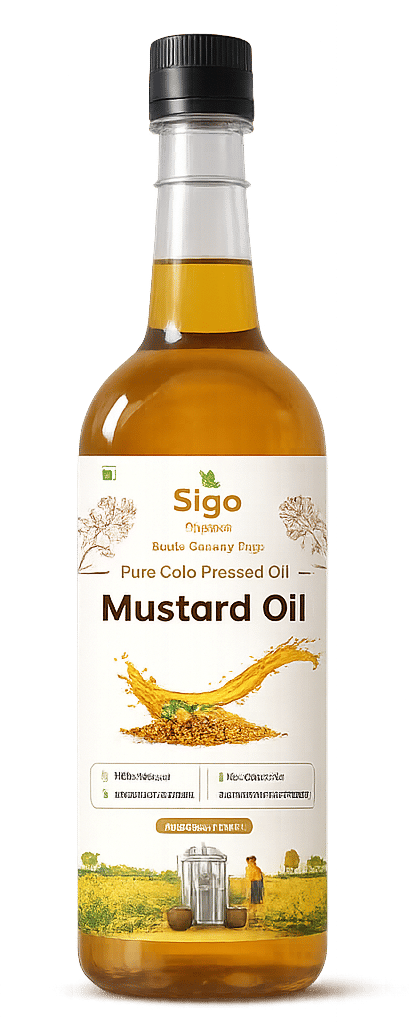
Hydraulic Cold Pressed Black Mustard Oil
Extracted below 40°C from carefully selected native black mustard seeds in Jaipur, Rajasthan. 100% unrefined with authentic eye-watering pungency (jhal) and high smoke point (~250°C). Available in 250ml, 500ml, 1L, 2L and 5L packs starting from ₹89.
Ready to cook healthier?
Shop our range of pure, hydraulic cold-pressed oils.