
Hydraulic Cold Pressed Mustard Oil: From Seeds to Your Kitchen
SIGO Team
SIGO Oils
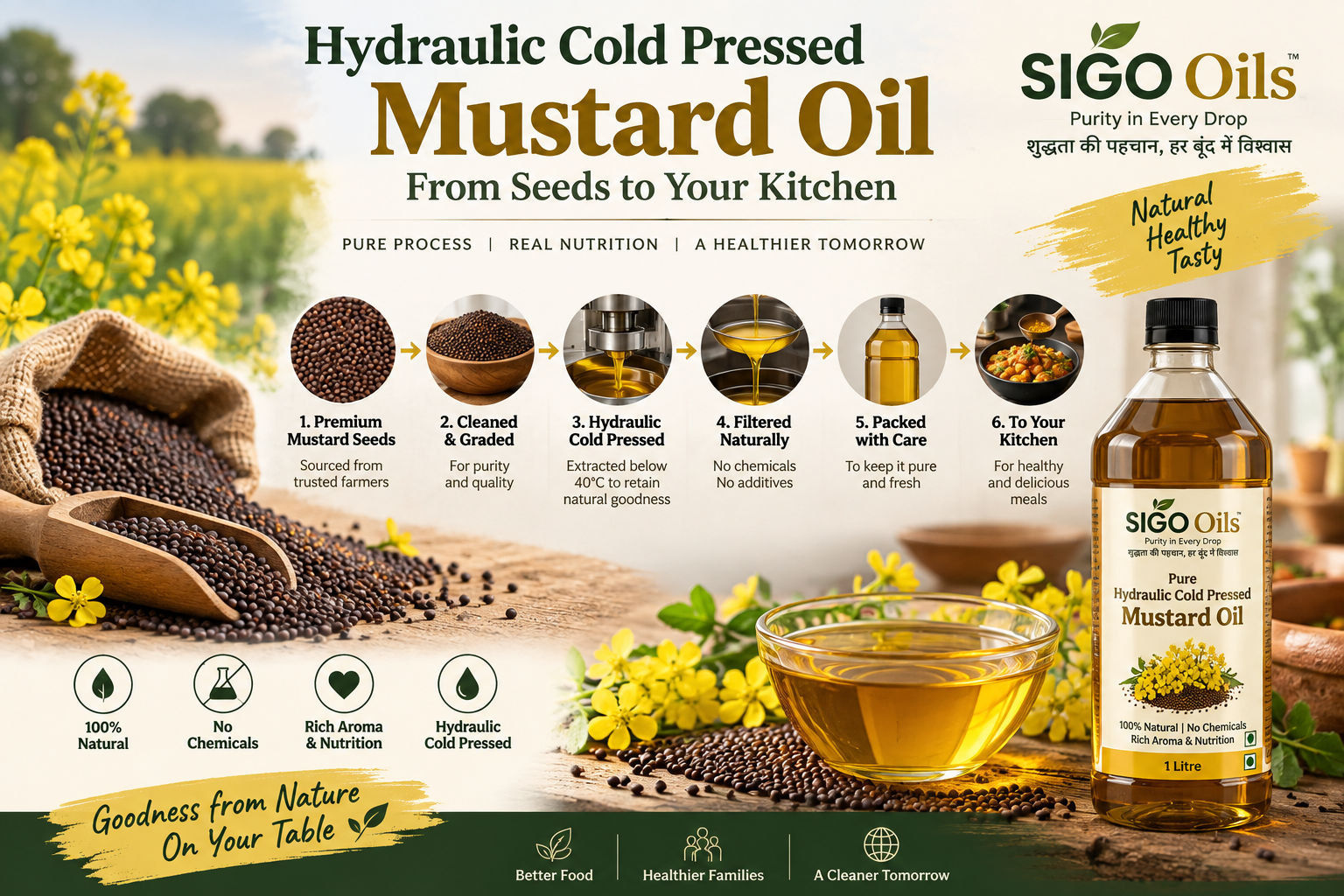
Hydraulic Cold Pressed Mustard Oil: From Seeds to Your Kitchen
Mustard oil has been a familiar part of Indian kitchens for generations. It is valued for its distinctive aroma, bold flavor, and versatility in everyday cooking. But have you ever wondered how mustard seeds are transformed into the oil that reaches your kitchen?
Hydraulic cold pressing is one method used to extract oil from mustard seeds while focusing on controlled processing and minimal heat exposure. In this guide, we will explore the journey of mustard oil—from selecting the seeds to bottling the finished product.
What Is Hydraulic Cold Pressed Mustard Oil?
Hydraulic cold pressed mustard oil is extracted from mustard seeds using a hydraulic pressing system. The machine applies pressure to the seeds to release their natural oil.
Unlike processes that intentionally use high temperatures during extraction, cold-pressing methods aim to limit heat generated during processing. The exact temperature can vary depending on the machine, seed condition, pressure, and operating practices.
The result is mustard oil with the characteristic color, aroma, and flavor associated with mustard seeds.
Step 1: Selecting Quality Mustard Seeds
The journey begins with the selection of suitable mustard seeds.
Good-quality seeds should be:
- Clean and free from visible impurities
- Properly stored
- Suitable for edible oil production
- Free from signs of moisture damage or spoilage
Seed quality can influence the taste, aroma, color, and overall quality of the finished oil.
At Sigo Oils, careful attention to raw materials is an important part of the oil-making process.
Step 2: Cleaning the Seeds
Before pressing, mustard seeds are cleaned to remove dust, stones, plant material, and other unwanted particles.
Cleaning helps protect the machinery and supports better hygiene during production. It also helps maintain consistency in the finished product.
Step 3: Hydraulic Cold Pressing
After cleaning, the mustard seeds are placed into the hydraulic pressing system.
The machine applies controlled pressure to the seeds, allowing the oil to separate from the solid material. Because the process does not intentionally rely on high extraction temperatures, the oil can retain the natural sensory characteristics of mustard seeds.
The efficiency of extraction depends on several factors, including:
- Seed variety
- Moisture content
- Seed quality
- Press pressure
- Processing time
- Machine design
The remaining solid material is commonly known as oil cake.
Step 4: Oil Collection and Filtration
Once the oil is extracted, it is collected and may be filtered to remove suspended particles.
Filtration helps improve clarity and removes unwanted residues. Some cold-pressed oils may have a naturally rich color or a slight amount of sediment, depending on the filtration method used.
The filtration process should be selected according to the desired product quality and applicable food-safety requirements.
Step 5: Quality Checks
Before bottling, edible mustard oil should be checked for quality and compliance with applicable food regulations.
Important checks may include:
- Appearance and aroma
- Cleanliness and packaging condition
- Product specifications
- Food-safety requirements
- Label information
- Batch and traceability details
Consumers should look for properly labeled products from identifiable manufacturers or brands.
Step 6: Bottling and Packaging
After processing and quality checks, the oil is filled into clean, food-grade containers.
The packaging should protect the oil from light, air, moisture, and contamination. Proper sealing and suitable storage conditions help preserve the product during transportation and use.
A product label should provide relevant information such as:
- Product name
- Net quantity
- Ingredients, where applicable
- Manufacturing or packing details
- Batch or lot number
- Best-before or expiry information, as applicable
- MRP
- FSSAI license details, where required
- Manufacturer or marketer information
Why Do People Choose Cold Pressed Mustard Oil?
People choose cold pressed mustard oil for several practical reasons:
Distinctive Aroma and Flavor
Mustard oil is known for its strong, characteristic aroma and pungent flavor. It is commonly used in Indian cooking, pickles, marinades, and regional recipes.
Traditional Culinary Uses
Mustard oil is used in many Indian cuisines, especially in recipes where its bold flavor is an important part of the dish.
Minimal-Heat Processing Approach
Cold pressing aims to limit heat exposure during extraction. However, “cold pressed” does not automatically mean that every batch has the same nutritional profile or that the oil is suitable for every individual use.
Consumers should review the product label and use the oil according to applicable food-safety guidance.
How to Store Mustard Oil at Home
To maintain the quality of mustard oil:
1. Keep the bottle tightly closed when not in use.
2. Store it in a cool, dry place away from direct sunlight.
3. Avoid placing the bottle near a stove or another heat source.
4. Use clean, dry utensils when handling the oil.
5. Follow the storage instructions printed on the label.
6. Check the best-before date and product appearance before use.
Proper storage can help preserve the oil’s aroma and quality.
What Should You Check Before Buying Mustard Oil?
Before purchasing mustard oil, consider the following:
- Is the brand clearly identified?
- Is the product properly sealed?
- Is the label complete and readable?
- Is the extraction method clearly mentioned?
- Are the manufacturer and food-license details available where required?
- Is the oil packed in suitable food-grade packaging?
- Does the product match your cooking requirements and preferences?
Price is important, but product information, traceability, packaging, and trust are also valuable.
Why Choose Sigo Oils?
Sigo Oils focuses on hydraulic cold pressed edible oils for everyday cooking. Our approach emphasizes clear product information, careful processing, and the distinctive aroma and flavor associated with mustard oil.
If you are looking for hydraulic cold pressed mustard oil, explore the Sigo Oils range and check the product details, available pack sizes, and ordering options.
Final Thoughts
The journey of mustard oil begins with carefully selected seeds and continues through cleaning, hydraulic pressing, filtration, quality checks, and packaging.
Understanding this process can help customers make more informed choices when buying cooking oil. Whether you use mustard oil for everyday cooking, pickles, or traditional recipes, choose a properly labeled product and store it carefully at home.
Ready to cook healthier?
Shop our range of pure, hydraulic cold-pressed oils.