Hydraulic vs Wood Pressed Mustard Oil: Key Differences & Comparison
A technical comparison between modern hydraulic cold pressing and traditional wooden ghani extraction. Understand how temperature control influences oil quality.
SIGO Oils Engineering
SIGO Oils

When searching for unrefined, chemical-free cooking oils, two popular terms frequently appear: Hydraulic Cold Pressed and Wood Pressed (Lakdi Ghani).
Both methods are mechanical extraction processes that avoid chemical solvents. However, the engineering principles, temperature regulation, and oil purity characteristics differ in critical ways. In this guide, we break down the technical differences between hydraulic cold pressing and wood-pressed ghani mills.
---
What Is a Wood-Pressed Ghani (Lakdi Ghani)?
A wooden ghani consists of a wooden mortar and a rotating pestle (usually made of babool or neem wood).
- Mustard seeds are placed inside the mortar, and the pestle rotates slowly to crush the seeds and release oil.
- Traditionally powered by bullocks, modern wooden ghanis are driven by electric motors running at 14–20 RPM.
- While gentler than high-speed metal expellers, friction between the pestle, seeds, and wooden walls can still raise oil temperature to 45°C–55°C during extended runs if not strictly monitored.
What Is a Hydraulic Cold Press?
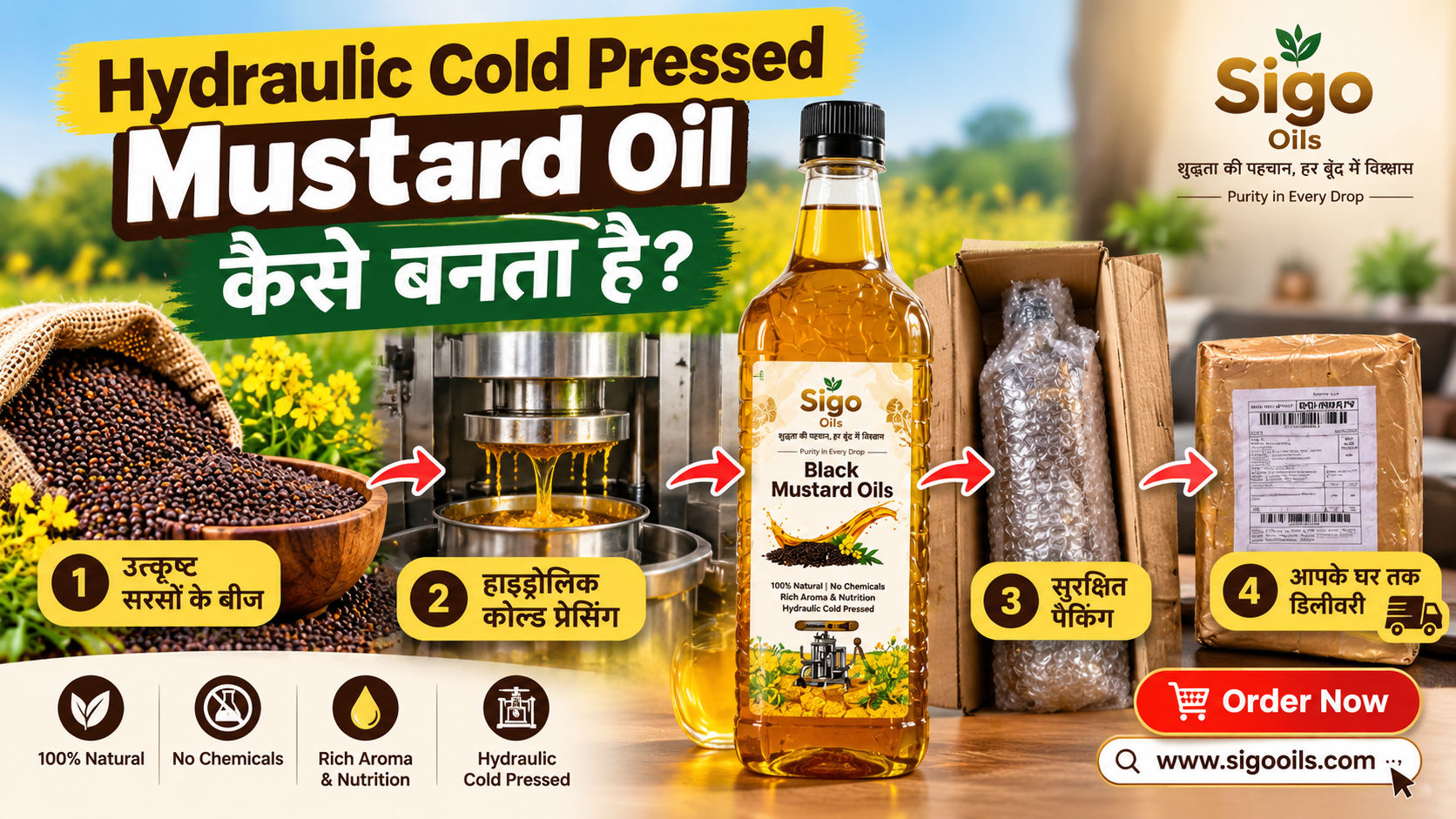
A hydraulic cold press uses a stationary perforated steel pressing cylinder and a heavy-duty hydraulic ram piston.
- The seeds are loaded into the pressing chamber.
- The hydraulic ram descends slowly under massive hydraulic fluid pressure (exceeding 200–300 bar), compressing the seeds without rotational friction.
- Because there is no spinning pestle or screw, zero rotational friction heat is produced.
- The pressing process is maintained strictly below 40°C from start to finish.
Explore our pure [Hydraulic Cold Pressed Black Mustard Oil](/products/cold-pressed-black-mustard-oil) extracted under this low-temperature standard.
---
Direct Comparison Table
| Attribute | Hydraulic Cold Press | Wood Pressed Ghani (Lakdi Ghani) |
| :--- | :--- | :--- |
| Extraction Mechanism | Direct linear hydraulic ram | Rotating wooden pestle in mortar |
| Rotational Friction | Zero rotational friction | Continuous rotational friction |
| Operating Temperature | Strictly below 40°C | 42°C – 55°C during continuous runs |
| Hygiene & Food Safety | Stainless steel / Food-grade alloy | Wood absorbs moisture; requires careful sanitation |
| Volatile Compound Retention | 100% essential oil retention | High, but minor losses under heat buildup |
| Aroma (Jhal) | Intense, pure, eye-watering | Rich and pungent |
| Sedimentation & Clarity | Micro-cloth filtered, clear amber | Often cloudy with natural sediment |
---
Why Food-Grade Hygiene Matters
While wooden ghanis offer rustic appeal, wood is naturally porous and hygroscopic. Over time, moisture, microbial spores, and rancid oil residues can settle inside micro-crevices of wooden pestles if not cleaned meticulously every day.
Hydraulic pressing systems utilize precision-machined, food-grade steel contact surfaces that can be sanitized continuously between batches. This guarantees that every drop of [Cold Pressed Black Mustard Oil](/products/cold-pressed-black-mustard-oil) meets strict food safety (FSSAI) standards without compromising raw traditional flavor.
---
Which One Should You Choose?
Both hydraulic cold-pressed and genuine slow wood-pressed oils are far superior to chemical refined supermarket oils. However:
- If your priority is guaranteed extraction below 40°C, maximum pungent volatile retention, and pristine food-grade cleanliness, hydraulic cold pressed is the gold standard.
- You can shop our full collection of [Hydraulic Cold Pressed Mustard Oil](/shop/mustard-oil) online.
---
Frequently Asked Questions
Is hydraulic cold pressed oil truly cold pressed?
Yes. By definition, true cold pressing requires extraction temperatures to stay below 40°C without external heat. Hydraulic pressing achieves this reliably because it relies on linear pressure rather than rotational friction.
Does hydraulic pressing destroy nutrients?
No. Because temperatures remain strictly under 40°C with zero chemical solvents, natural Vitamin E, essential fatty acids, and volatile essential oils remain completely intact.
How can I verify purity?
Look for transparent manufacturer information, certified cold-press facility details, FSSAI licensing, and an authentic, naturally pungent aroma upon opening the bottle.
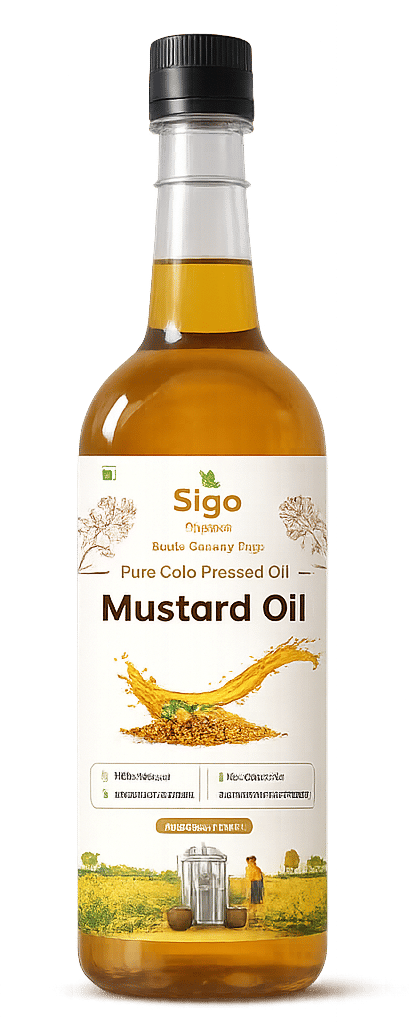
Hydraulic Cold Pressed Black Mustard Oil
Extracted below 40°C from carefully selected native black mustard seeds in Jaipur, Rajasthan. 100% unrefined with authentic eye-watering pungency (jhal) and high smoke point (~250°C). Available in 250ml, 500ml, 1L, 2L and 5L packs starting from ₹89.
Ready to cook healthier?
Shop our range of pure, hydraulic cold-pressed oils.